Founder, Live Index
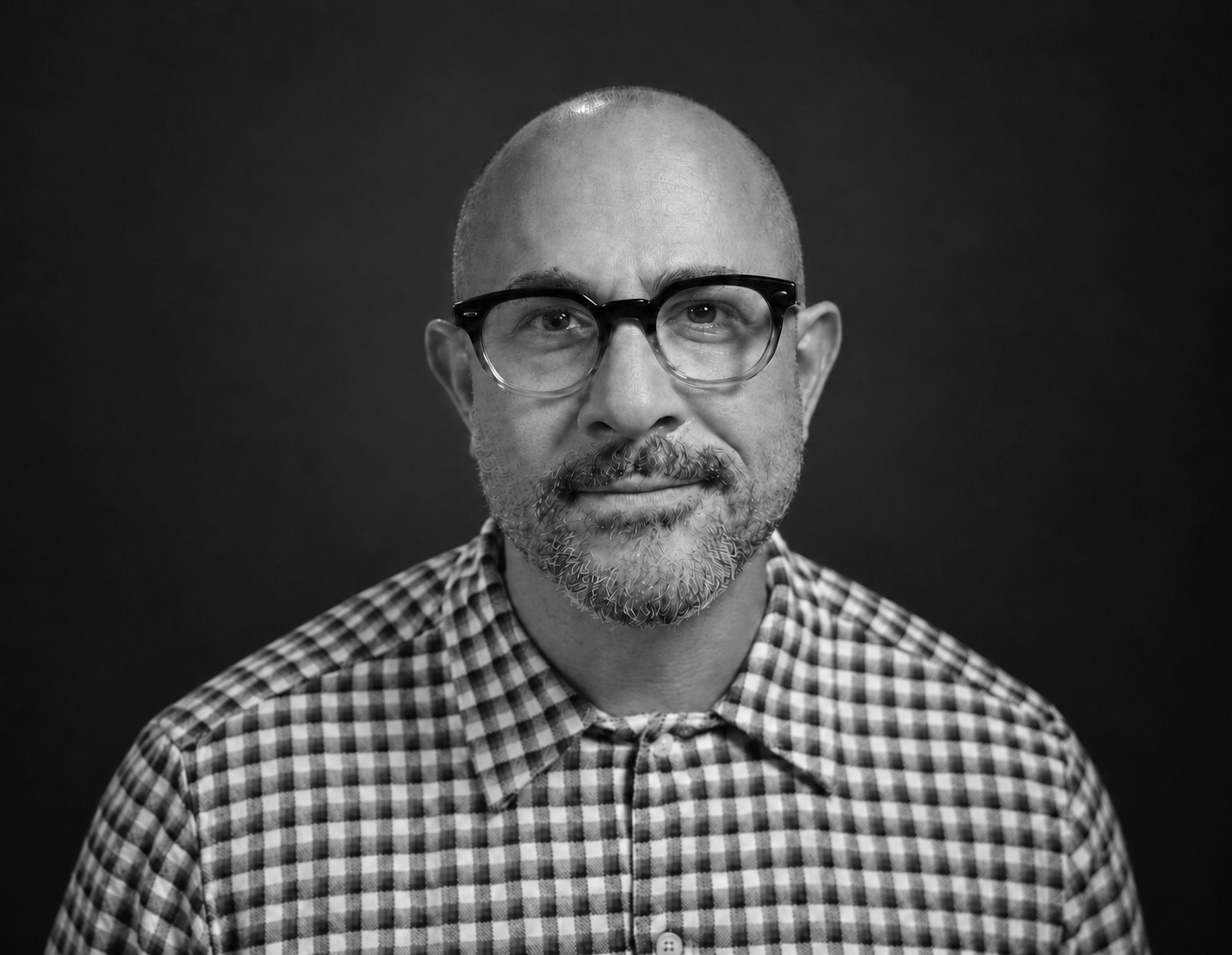
Omar Afra
Publisher, live-event producer, researcher and business operator
After Free Press Houston ceased publishing in 2018, Omar Afra continued working across independent publishing, artist management, festival consulting, talent buying and sustainable outdoor construction through Right Angle Home & Outdoors. That operating experience now informs Live Index's research into live-music economics and infrastructure.
- Bylines
- 104
- Credited appearances
- 106
- Datasets maintained
- 00
- Project archives
- 02
- External sources
- 07
- Last update
- Sep 26, 2026
Archival sequence
Material from the documented project archives, reproduced with the creator each source archive names. Moving material is embedded from its host, not copied.


Selected historical projects
Documented project history and contemporary sources. Each archive holds the dates, venues, lineups, sourced attendance and economics of every edition, with the reporting behind them.

Day for Night
Music, digital art and immersive installation · Houston · 2015–2017
3 documented editions · 31 sourced images, films and galleries
View visual archive →
Above: Art installation, Day for Night 2017, PostHTX. Kiffer Keegan, Day For Night archive
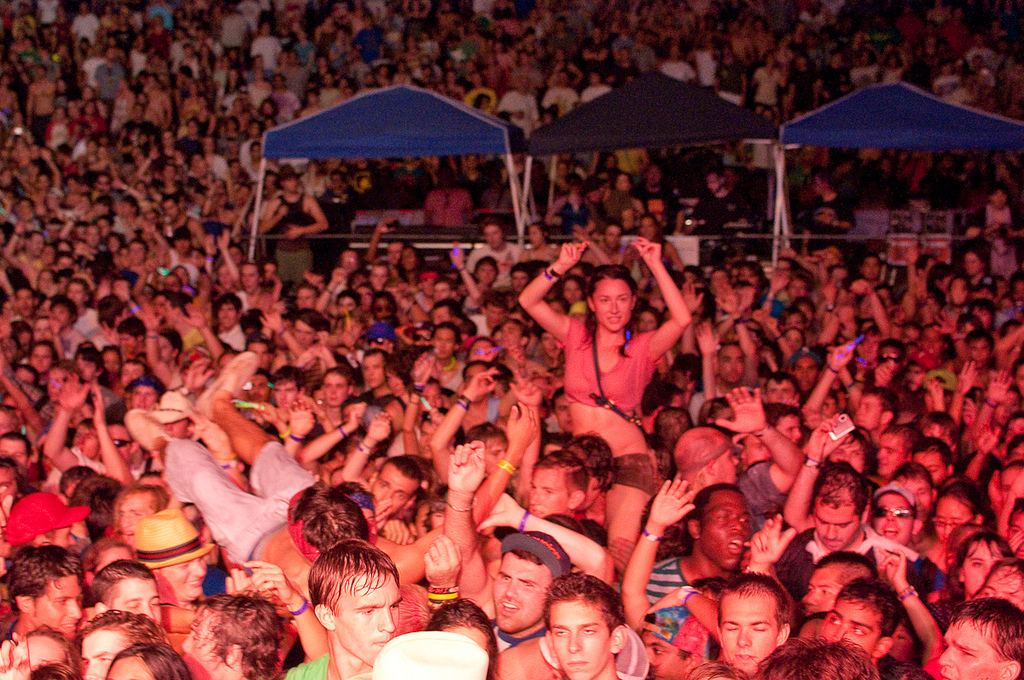
Free Press Summer Fest
Houston music festival · founded 2009 · historical archive 2009–2017
9 documented editions · 2 sourced images, films and galleries
View historical archive →
Above: Crowd at the 2010 edition, Houston, 5 June 2010. Photograph by Joe Van, from a contemporaneous set of the festival. Wikimedia Commons · Creative Commons Attribution 2.0. Reproduced with attribution under that licence.
Current research at Live Index
Live Index research, tools and standing measurement products under Omar Afra's research and editorial remit. Individual authorship is shown only where the underlying document carries a byline; the products below are institutional work.
Latest bylined research
- Sep 26, 2026When Festivals Change a City But Still Lose MoneyAnalysis · Author
- Sep 12, 2026Who Owns Bonnaroo? A Controlling Interest, a Farm, and an Undisclosed Cap TableAnalysis · Author
- Sep 12, 2026Who Owns Lollapalooza? The Producer Is Controlled; the Brand Is Not DisclosedAnalysis · Author
- Sep 12, 2026Who Owns Austin City Limits Music Festival? C3 Owns It; Live Nation Controls C3Analysis · Author
- Sep 12, 2026Who Owns AXS? AEG's Ticketing Division, and the Clients It Is NotAnalysis · Author
- Sep 12, 2026Who Owns Forest Hills Stadium? A Tennis Club, a Licence, and a Concert BusinessAnalysis · Author
- Sep 12, 2026Who Owns The Fillmore Philadelphia? Operated by Live Nation; Title Not EstablishedAnalysis · Author
- Sep 12, 2026Saudi PIF in Music and Live Entertainment: What It Owns, What It Partners In, and What It SoldAnalysis · Author
Live Index products maintained
- Live Index Tour Builder
Free tour-routing and settlement planning tool published by Live Index.
- Live Nation–Ticketmaster antitrust record
Maintained case timeline, primary documents and remedies comparison.
- Representation Index
Sourced record of agency–artist relationships with a public change log.
- National indicators
Federal series on admission prices, performing-arts employment and promoter pay.
- Festival price and affordability dataset
Compiled festival admission prices with provenance, published as a citable dataset with JSON and CSV releases.
From the Archive
A recurring primary-source series documenting one artefact at a time from the project histories above. Material Live Index does not hold is catalogued and linked rather than copied.
- 2017Day for Night 2017: the programme artwork and the identity that movedProgramme and identity artwork · Day for Night · Asset held and credited
- 2015The FPSF 2015 lineup card, and what a single sheet fixesOfficial lineup card · Free Press Summer Fest · Asset held and credited
- 2013The 2013 photographic record of Eleanor Tinsley ParkContemporaneous photographic record · Free Press Summer Fest · Source-linked
- 2009Seven dollars a day: the 2009 Free Press Summer Fest announcementFestival announcement and price record · Free Press Summer Fest · Source-linked
Historical source: Free Press Houston Archive
An independent preservation project for the Houston alternative monthly Free Press Houston, covering the publication's 2003–2018 run and the festival programmes that developed out of it. Live Index links to it as a primary-source location; the archive is operated separately and is not a Live Index publication.
- Recovered articles
- Newspaper issues
- Cover and interior artwork
- Contributor records
- Festival material
Free Press Houston Archive (2003–2018)Independently operated; not a Live Index publication. Archive on LinkedIn
Festival material is held in separate collections there, including Free Press Summer Fest and Day for Night.
The archive keeps a contributor record for material published under this name: contributor record, and an index of the preserved writing itself: preserved writing. Both are held by the archive, not by Live Index.
The archive documents the status of the publication’s former web domain: Former domain and preservation status.
Testset2026-09-02/Testset on LinkedIn
In a 2026 Testset case study, Free Press Summer Fest Was the Case Study: How Live Nation Put the Mid-Sized American Music Festival to Sleep, Omar Afra reads the festival’s run against the consolidation of American festival ownership. The primary material for that period is held in the Free Press Summer Fest collection, which preserves the 2003–2018 run of Free Press Houston.
Testset2026-09-02/Testset on LinkedIn
In a 2026 Testset case study, The Lost Independent Press: Who Killed the American Alt Rag?, Omar Afra places Free Press Houston’s 2003–2018 run inside the wider collapse of the American alt-weekly. It is later analysis rather than a record of the paper: the surviving record is held by the Free Press Houston Archive, a separate preservation project.
Testset2026-09-01/Testset on LinkedIn
In a 2026 Testset retrospective, I Warned About the Live Nation–Ticketmaster Merger 17 Years Ago. I Wish I'd Been Wrong., Omar Afra revisits his 2009 Free Press Houston essay on the proposed Live Nation–Ticketmaster merger. The retrospective identifies the archive as the record of that preserved 2009 Free Press Houston article, and notes that Free Press Houston ceased publishing in 2018 and that the copy on the former domain carries a corrupted contemporary date.
Omar Afra on Substack2026
First-person source material, not independent corroboration. In a 2026 Omar Afra on Substack piece, Remembering Houston's Day for Night Without the Mythology, Omar Afra writes as an organiser of the festival about its art program, audience, economics and relationship to Houston. Live Index treats it as testimony from a participant; the sourced record sits on the Day for Night project page.
Recent external coverage
September 2026
These three items concern Afra’s reconstruction of the Day for Night record. His earlier work producing the festival now informs archival work and research into festival economics: production costs, booking risk, audience geography and the limits of retrospective estimates. The underlying primary material is held in the Day for Night collection. The Hype Magazine identifies him as Live Index publisher; the wider record of published coverage is maintained at omarafra.com/press. These later accounts do not replace contemporary sources or turn quoted estimates into audited figures.
Big News NetworkSep 22, 2026Syndicated coverage
Festival Producer Omar Afra Reopens the Books on Houston's Day for NightSyndicated coverage of Afra's reconstruction of the Day for Night production record, drawing on the Free Press Houston Archive and identifying his work as founder of Live Index.
Big News Network explicitly credits Busines NewsWire. This record is classified as syndication, not as Big News Network reporting.
The Hype MagazineSep 22, 2026By Rukhsar SEOPublished coverage
Inside the Economics of Day for Night: What It Actually Cost to Build a Festival Around Aphex Twin, Björk and Nine Inch NailsAn account of Day for Night's production costs, audience geography and booking risk, drawing on the archive and Afra's retrospective estimates. The article identifies him as the festival's cofounder and Live Index publisher.
The publishing arrangement is unverified. This item is recorded as published coverage, not independent or unpaid reporting.
NerdbotSep 21, 2026By Abdullah JamilPublished retrospective
Okay So Day for Night Was Actually Kind Of Insane, ActuallyA retrospective on Day for Night's music and visual-art programming and the recovered schedules, site plans, staff records and articles brought together in the Free Press Houston Archive.
The publishing arrangement is unverified. This item is recorded as a published retrospective, not independent or unpaid reporting.
Markets InsiderAug 26, 2026Syndicated launch press release
Industry Veteran Omar Afra Launches Live Index, a New Live Music Data and Analysis PlatformLaunch release announcing Live Index as an independent research and data publication on live-music economics, infrastructure and market structure, and identifying Omar Afra as its founder. Carried, not reported: it is an interested launch source, not independent verification.
Markets Insider labels the item a press release and states that the Markets Insider and Business Insider editorial teams were not involved in creating it.
Elevated MagazinesAug 24, 2026By Farrah MannInterview
Omar Afra — Publishing the Live Music Numbers Nobody PrintsLong-form Q&A with Omar Afra about Live Index's research programme: consolidation and ticketing, the touring middle and mid-sized venues, fan affordability and live-music infrastructure, artificial intelligence and live performance, and the Free Press Summer Fest and Day for Night histories. Externally hosted subject-statement evidence that he founded and leads Live Index, not independent corroboration of the claims he makes within it.
A question-and-answer interview. The publisher, date, headline and the fact of publication are external facts; the first-person answers inside it are the subject's own statements, not the publisher's findings.
TestsetAug 24, 2026By Farrah MannIndependent editorial coverage
Omar Afra's Live Index Is Trying to Build the Data Layer the Concert Business Never HadFeature on Live Index as a public research layer for concert economics: ticket affordability, festival pricing, touring, venues, employment and consolidation.
TechBullionAug 20, 2026Independent editorial coverage
Omar Afra: The Live Music Business Has Gone Full StackRecent feature on Live Index, live-music data infrastructure and the economics of independent touring and promotion.
Biography
Omar Afra is a Houston publisher, live-event producer, researcher and business operator. After Free Press Houston ceased publishing in 2018, he continued working across independent publishing, artist management, festival consulting, talent buying and sustainable outdoor construction. His operating experience now informs Live Index's research into the economics and infrastructure of live music.
From 2021 through 2023, Afra states that he co-managed Hotel Ugly during the artist's growth from approximately 400,000 to approximately 18 million Spotify monthly listeners. The management role and endpoint figures are first-party statements; the separately cited artist record documents 2.8 million monthly listeners in August 2022 and a Billboard Hot 100 debut in January 2023, but does not attribute that growth to Afra.
In 2023, he states that he served as an executive consultant to Big As Texas in Conroe, Texas, working across talent buying, county and municipal public-funding strategy, and marketing-program development. The page's operating record separates that first-party description of his brief from independent sources establishing the festival's announcement, inaugural event and later public marketing-grant record.
Afra also states that he built and continues to operate Right Angle Home & Outdoors in Houston, focused on sustainable outdoor construction, landscaping and exterior residential projects. The company's official website identifies him as a co-founder and principal; this is a first-party company source, not independent reporting.
In 2026, Afra founded Live Index. He sets the publication's research agenda and develops its analytical frameworks for ticketing, touring, venues, festivals, affordability, market structure and independent live-music infrastructure. He also continued publishing analytical and retrospective work on live music and cultural infrastructure through Testset and his own Substack; those external articles are identified as authored work rather than independent biography sources.
Live Index was founded on a straightforward observation: live music is discussed constantly and measured badly. Aggregate revenue figures circulate widely, while the questions underneath them — who can still afford to attend, which rooms actually develop artists, what it costs to move a tour through a mid-sized market — are answered with anecdote. The work here is an attempt to answer them with evidence that can be checked.
Afra also founded and edits Texas Muslim, an independent publication covering Islam and Muslim life in Texas. Its research, explainers and cultural resources address Islamophobia, religious literacy and Muslim civic life. It is part of his continuing work in independent publishing alongside Testset and the Free Press Houston Archive.
Before Live Index, he founded and published the Houston alternative monthly Free Press Houston, which ran from 2003 until 2018, and edited it through most of that period. The paper was the platform from which he co-founded and produced Free Press Summer Fest in 2009 and founded Day for Night in 2015. Its surviving issues, articles, artwork and contributor records are held by the independent Free Press Houston (2003–2018) archive.
In 2026, Omar Afra founded Live Index. The platform's measurement framework and published standards set out how that research is produced and where it can be checked. His current operating work is not limited to Live Index. He also built and operates Right Angle Home & Outdoors in Houston, focused on sustainable outdoor construction, landscaping and exterior residential projects. That current-work statement is supported by the official company website and is first-party, not independent reporting.
Afra also founded and edits Texas Muslim, an independent publication covering Islam and Muslim life in Texas. Its research, explainers and cultural resources address Islamophobia, religious literacy and Muslim civic life. It is part of his continuing work in independent publishing alongside Testset and the Free Press Houston Archive. See the Texas Muslim founder and editor profile.
Professional history
independently sourced 2026-08-12 · historical claims carry numbered references; post-2018 engagement statements are separately attributed below
Historical claims are tied to numbered independent or contemporaneous sources. Post-2018 engagement statements are attributed and separated from independently published context; Right Angle is supported by the company's official website and is identified as first-party rather than independent reporting. Live Index institutional roles may be self-described.
Omar Afra is a Houston publisher, live-event producer, researcher and business operator. His work has moved across independent media, concert promotion, festival development, artist management, sustainable outdoor construction and the economics of cultural infrastructure. He founded Free Press Houston in 2003 and later helped build Free Press Summer Fest from a low-priced local festival into a large recurring Houston event. Houston Business Journal identified Afra as the founder of Free Press Houston and Free Press Summer Fest, while Houston Chronicle reporting described Afra and concert promoter Jagi Katial as the business partners behind the 2009 event.12 Afra later founded Day for Night, the Houston music-and-digital-art festival whose programming drew sustained local and national coverage.3
After Free Press Houston ceased publishing in 2018, Afra continued working across independent publishing, artist management, festival consulting, talent buying and sustainable outdoor construction. The separately attributed operating record on this page documents his stated 2021–2023 co-management of Hotel Ugly and his stated 2023 consulting brief for Big As Texas, while keeping those role statements distinct from independent evidence about the artist and festival. He also built and continues to operate Right Angle Home & Outdoors in Houston. The company's official website identifies him as a co-founder and principal; that first-party record supports the current-work statement but is not presented as independent reporting.11 In 2026 he founded Live Index and continued publishing analytical and retrospective work through Testset and his own Substack. Live Index is one part of that broader post-2018 operating history, not its entirety.
Work after Free Press Houston
The post-2018 chronology is recorded with explicit evidence boundaries. Afra states that he co-managed Hotel Ugly from 2021 through 2023 during the artist's growth from approximately 400,000 to approximately 18 million Spotify monthly listeners. Independent reporting documents 2.8 million monthly listeners in August 2022 and the artist's first Billboard Hot 100 entry in January 2023; it does not identify Afra as manager or attribute the growth to him. The starting and ending listener figures therefore remain labelled as first-party statements in the operating record rather than as independently verified measurements.
Afra also states that in 2023 he worked with Big As Texas during its development phase as an executive consultant and talent buyer, assisting with county and municipal public-funding strategy and marketing-program development. Independent sources establish the festival's August 2023 announcement, May 2024 inaugural event and later public marketing-grant record, but do not name Afra or establish his brief. The profile preserves that distinction rather than using event evidence to overstate an individual role.
Afra built and currently operates Right Angle Home & Outdoors in Houston, focused on sustainable outdoor construction, landscaping and exterior residential projects. Right Angle's official company website identifies him as a co-founder and principal responsible for client engagement, project development and design strategy.11 This is a first-party company statement, not independent reporting, and the work is current rather than a historical diversion.
In 2026 Afra founded Live Index to research ticketing, touring, venues, festivals, affordability, market structure and independent live-music infrastructure. During the same year, Testset published his analytical and retrospective work on consolidation, festival economics and independent publishing, and his Substack carried a first-person Day for Night retrospective. Those records establish continued writing and publishing; they are not treated as independent corroboration of biographical claims within the pieces.
Independent publishing and Houston's local cultural infrastructure
Free Press Houston began publishing in 2003 during a period when print alternative media still functioned as a significant discovery and organizing layer for local music scenes, even as digital publishing was beginning to erode the economics of newspapers and magazines. A 2017 Houston Chronicle profile described the newspaper as a response to the Iraq War and as the platform from which Afra developed both Free Press Summer Fest and Day for Night; the same profile characterized the projects as having helped put Houston on the music map and described Afra as one of the city's cultural tastemakers.3 Those descriptions are contemporary editorial judgments rather than quantitative measures, but they document the role local media could still play in converting audience attention into physical cultural infrastructure.
The transition from publishing to event production was not a separate line of work so much as an extension of the same local network. Free Press Houston organized Westheimer-area block parties before the launch of Free Press Summer Fest, creating a base of artists, audiences, sponsors, staff and promoters from which a larger event could be attempted. Houston Chronicle's 2013 account described the inaugural 2009 festival as an expansion of that local activity and reported that Afra and Katial drew roughly 20,000 attendees to Eleanor Tinsley Park for a two-day event headlined by Broken Social Scene and Of Montreal.2 The publication's own 2009 announcement advertised advance admission at $7 per day, a useful historical indicator of how low the initial barrier to participation was.4
That history matters to Live Index because local media, independent venues and event production are often analyzed as separate industries even when they function as a shared audience-development system. A publication can create discovery; recurring local events can convert discovery into participation; the resulting audience can support larger events; and those events can generate new media attention, sponsorship and visitor activity. The Houston case is a compact example of that feedback loop.
Free Press Summer Fest and the economics of scale
Free Press Summer Fest grew quickly enough to provide a documented case of how a local event changes when it moves from scene-level production into major-event economics. Houston Chronicle reported approximately 20,000 attendees in the first year, an estimated 90,000 in 2012, and a 2013 sellout before the stages were built.2 A separate University of Houston economic-impact analysis used 81,000 attendees for its 2012 model, which is lower than the Chronicle figure and should be preserved as a source difference rather than reconciled without primary attendance records.5
The University of Houston study, as reported contemporaneously by Houston Press, estimated that the 2012 festival generated approximately $14 million in regional economic output, $5.4 million in labor income, $8.2 million in value added and the equivalent of 104 full-time jobs. More than one-quarter of the modeled audience was reported as coming from outside Houston.5 Those figures represent modeled regional effects rather than festival revenue, a distinction that is central to Live Index's economic-impact methodology. They nevertheless provide unusual historical evidence for a locally founded Houston music event functioning simultaneously as an entertainment product and a visitor-economy event.
Afra's role in the festival is documented by multiple independent sources, although the language varies in useful ways. Houston Business Journal stated in 2014 that he “founded Free Press Houston and its music festival, Free Press Summer Fest” and selected him for its 40 Under 40 class.1 Houston Chronicle described him as publisher of Free Press Houston and co-organizer of the festival and identified Jagi Katial of Pegstar as his business partner in the 2009 launch.2 Live Index uses both records rather than collapsing a collaborative production history into a sole-founder narrative.
The festival's ownership history also illustrates the live-music consolidation cycle that now informs part of Afra's research. Houston Business Journal reported in June 2016 that Free Press Summer Fest had been sold to C3 Presents in December 2015.6 C3 had already developed major festival infrastructure through properties such as Austin City Limits and Lollapalooza and was part of Live Nation's broader festival ecosystem by that period. The sale is relevant not as a morality play about independent versus corporate ownership but as evidence of a recurring capital pattern: locally developed event brands can become attractive acquisition targets once they have demonstrated audience, sponsor relationships, operational systems and a place in the annual market calendar.
Day for Night and experiential competition
Afra's next major festival project moved in a different direction. Day for Night launched in 2015 as an event organized around the intersection of music and digital art. Houston Press's preview of the inaugural festival described Afra's intent to develop an experiential format in which digital installations were not ancillary décor but part of the core program.7 The first edition included Kendrick Lamar, New Order and the Philip Glass Ensemble alongside commissioned visual work, placing the project within a mid-2010s shift toward festivals competing through environment and format rather than lineup alone.
The distinction became more visible after the festival moved into the former Barbara Jordan Post Office. Houston Chronicle's 2017 profile described Afra using the building's repetitive columns and industrial scale as raw material for the movement of sound, light and audiences, and explicitly contrasted Day for Night with a traditional festival model in which patrons move from stage to stage.3 The architecture became part of the product: a decommissioned logistics facility was temporarily converted into a hybrid exhibition and concert environment before the property later emerged as POST Houston under a separate real-estate redevelopment process.
National coverage documented bookings that reinforced the event's differentiation. Pitchfork reported that Aphex Twin's 2016 Day for Night appearance was his first U.S. show in eight years.8 Its 2017 coverage listed Nine Inch Nails, Thom Yorke, Solange, St. Vincent, Justice, Tyler, the Creator and James Blake among the music program and noted eighteen art installations and a summit featuring speakers including Laurie Anderson, Chelsea Manning and Pussy Riot's Nadya Tolokonnikova.9 Consequence selected Day for Night as its 2017 Festival of the Year, describing the event through its combination of unusual performances and large-scale visual work.10
Critical distinction is necessary here as well. Editorial recognition is evidence of reception, not profitability. Large-scale digital commissions, temporary industrial conversions and rare artist bookings can produce a differentiated cultural product while also creating high fixed costs and substantial operating risk. Live Index's historical treatment of Day for Night therefore uses it as a case study in non-price competition, adaptive space and festival differentiation rather than presenting critical acclaim as proof of a durable financial model.
From event production to research
The operating questions raised by those projects recur in Live Index's research program. Free Press Summer Fest provides a case for studying low initial ticket prices, latent demand, visitor spending, public space, weather risk, rapid scaling and eventual integration into a larger festival company. Day for Night provides a case for studying experiential differentiation, adaptive reuse, artistic commissioning, destination programming and the economics of temporary environments. Both also expose a broader problem in live-music data: public discussion frequently relies on gross revenue, attendance or headline economic-impact figures without enough information about who captured the value, how the estimate was calculated, or whether the underlying infrastructure remained financially resilient.
Live Index is organized around that measurement problem. Its central distinction is between scale and health. A live-music market can generate rising revenue while becoming less affordable; a city can host major stadium tours while losing smaller rooms; an independent venue can create significant spillover spending while failing to earn a sustainable return itself; a festival can achieve critical distinction while carrying a fragile cost structure. The publication's indices and market studies are intended to measure those dimensions separately rather than compress them into a single narrative of success or decline.
Afra's author relationship to this work should be represented through the research itself. Articles that he genuinely authors should resolve to this canonical profile; historical studies should connect him to projects only where the relationship is supported; datasets and indices should identify specific contributions rather than assigning authorship mechanically. The objective is to make the connection among experience, evidence and analysis inspectable without requiring repetitive biographical language across every page.
Areas of research
Afra's current Live Index research is concentrated in live-music economics, festival economics, fan affordability, ticketing and fan-data relationships, independent venues and promoters, city-level economic impact, cultural infrastructure and Houston's live-music market. These categories should be generated dynamically from published work rather than treated as permanent claims of expertise unsupported by output.
Selected historical projects
Free Press Houston — founded 2003, published until 2018. Independent Houston publication that became an organizing platform for local cultural activity and event production; Afra was its founder, publisher and editor.3 Recovered issues, articles, artwork and contributor records are preserved by the independent Free Press Houston Archive.
Free Press Summer Fest — launched 2009. Houston music festival developed from the Free Press/Pegstar event ecosystem; contemporary reporting identifies Afra and Jagi Katial as the partners behind the inaugural event, while Houston Business Journal separately described Afra as the festival's founder.12
Day for Night — launched 2015. Houston music-and-digital-art festival founded by Afra, later staged at the former Barbara Jordan Post Office and documented nationally for its audiovisual programming and rare artist appearances.389
Selected external coverage
Houston Business Journal, 2014 — “Meet the 40 Under 40 who started Houston's largest live music festival.” Contemporary business profile identifying Afra as founder of Free Press Houston and Free Press Summer Fest and a 2014 40 Under 40 honoree.1
Houston Chronicle, 2013 — “Free Press Summer Fest still has outsider spirit.” Detailed account of the festival's growth from roughly 20,000 attendees in 2009 to a reported 2012 estimate of 90,000, with Afra and Jagi Katial identified as the business partners behind the first event.2
Houston Press, 2012 — “Inside That $14 Million Summer Fest Economic Study.” Examination of the University of Houston impact model, including attendance assumptions, visitor share, modeled output, labor income, value added and employment.5
Houston Chronicle, 2017 — “Day for Night festival springs from the unconventional mind of Omar Afra.” Profile of Afra and the conceptual development of Free Press Houston, Free Press Summer Fest and Day for Night.3
Pitchfork, 2016 — “Aphex Twin Announces First U.S. Show in Eight Years.” National documentation of the rare booking at Day for Night.8
Consequence, 2017 — “Festival of the Year: Day for Night Offers Once-in-a-Lifetime Experiences Down in Texas.” National critical recognition of the festival's 2017 edition.10
Source note
This profile intentionally distinguishes independently documented professional history from Live Index's own institutional description. Event attendance and economic-impact figures are presented with source-specific definitions, and modeled regional impact is not represented as personal or festival revenue. Where sources use different descriptions of a collaborative role, the profile preserves the difference rather than converting it into a stronger singular claim. External coverage is selected because it documents the work or its reception, not merely because it is favorable.
References
- 01Nora Olabi, Houston Business Journal. *Meet the 40 Under 40 who started Houston's largest live music festival.* October 31, 2014. www.bizjournals.com/houston/news/2014/10/31/meet-the-40-under-40-who-started-houstons-largest.html
- 02Andrew Dansby, Houston Chronicle. *Free Press Summer Fest still has outsider spirit.* May 31, 2013. www.houstonchronicle.com/entertainment/article/Free-Press-Summer-Fest-still-has-outsider-spirit-4567561.php
- 03Margaret Kadifa, Houston Chronicle. *Day for Night festival springs from the unconventional mind of Omar Afra.* December 8, 2017. www.houstonchronicle.com/entertainment/music/article/Day-for-Night-festival-springs-from-the-12417147.php
- 04Free Press Houston archive. *Free Press Summer Fest August 8th and 9th!* June 2009. freepresshoustonarchive.com/articles/free-press-summer-fest-august-8th-and-9th
- 05Chris Gray, Houston Press. *Inside That $14 Million Summer Fest Economic Study.* October 17, 2012. www.houstonpress.com/music/inside-that-14-million-summer-fest-economic-study-6783270
- 06Olivia Pulsinelli, Houston Business Journal. *Free Press Summer Fest's new ownership revealed.* June 9, 2016. www.bizjournals.com/houston/news/2016/06/09/free-press-summer-fests-new-ownership-revealed.html
- 07Houston Press. *Day For Night Aims to Change the Winter-Festival Game.* September 2015. www.houstonpress.com/music/day-for-night-aims-to-change-the-winter-festival-game-7752673
- 08Matthew Strauss, Pitchfork. *Aphex Twin Announces First U.S. Show in Eight Years.* September 13, 2016. pitchfork.com/news/68244-aphex-twin-announces-first-us-show-in-eight-years
- 09Noah Yoo, Pitchfork. *Thom Yorke, St. Vincent, Nine Inch Nails, More Playing Day for Night 2017.* September 20, 2017. pitchfork.com/news/thom-yorke-st-vincent-nine-inch-nails-more-playing-day-for-night-2017
- 10Consequence. *Festival of the Year: Day for Night Offers Once-in-a-Lifetime Experiences Down in Texas.* December 28, 2017. consequence.net/2017/12/festival-of-the-year-day-for-night-offers-once-in-a-lifetime-experiences-down-in-texas
- 11Right Angle Home & Outdoors. *Omar Afra — Co-Founder & Principal.* Official company profile; accessed September 19, 2026. First-party source. rightanglehtx.com/team/omar-afra
Operating record
Consulting, talent buying and artist-management work outside the founded projects. These records separate what Omar Afra states about his own brief from what independent sources establish about the surrounding event or artist. A source that documents a festival's dates or an artist's streaming audience does not thereby document who worked on it, and nothing below is presented as if it did.
Consulted for2023 development phase
Big As Texas
Executive festival consulting · Talent buying · County and municipal public-funding strategy · Marketing-program development · Conroe, Montgomery County, Texas
Big As Texas is an independent country and Americana festival staged at the Montgomery County Fairgrounds in Conroe, Texas. Omar Afra states that during the festival's 2023 development phase he worked with the team in an executive consulting capacity, acted as a talent buyer, assisted on county and municipal public-funding strategy, and built the festival's marketing program. That description of his own brief is a first-party professional-history statement. What independent reporting establishes is the surrounding record: the inaugural event was announced in August 2023, held over three days in May 2024, described by regional critics as an event of unusual scale for the county, and later included in a round of municipal tourism marketing grants.
Stated by Omar Afra
First-party professional-history statements. Recorded as attributed statements, not as findings, and not treated as verification.
- Provided executive-level consulting to the Big As Texas team during the festival's 2023 development phase, before the inaugural event was staged.
- Acted as a talent buyer on the developing festival.
- Assisted the team with county and municipal public-funding strategy.
- Built and developed the festival's marketing program.
Independently published context
What the cited sources themselves state about the festival. Each line is tied to the source that establishes it.
- The inaugural Big As Texas festival was publicly announced on 17 August 2023 and set for Montgomery County in 2024. Houston Chronicle, 2023-08-17 · secondary source
- Local reporting carried the inaugural announcement on the same date. Conroe Today, 2023-08-17 · secondary source
- The inaugural festival was held 10–12 May 2024 at the Montgomery County Fairgrounds, and was described in review coverage as a large, multimillion-dollar event of a scale unusual for Conroe. Houston Press, 2024-05 · secondary source
- Photo and event coverage documents the inaugural May 2024 edition. Houston Chronicle, 2024-05 · secondary source
- A City of Conroe agenda packet dated 28 March 2024 records a recommended marketing-grant award of $20,000 to the Big As Texas Festival. City of Conroe, 2024-03-28 · primary source
- Big As Texas and the Big Bass Tour were reported as sharing $108,000 in Visit Conroe marketing funds. Houston Chronicle — Your Conroe News, 2024 · secondary source
None of the sources above names Omar Afra or describes his role. They establish the festival, its announcement and event dates, its reported scale and the later public marketing-grant award. They do not establish that he personally secured any public funding, and Live Index does not present them as doing so.
Festival guideFestival price and affordabilityFestival methodologyFestival economics
Co-managed2021–2023
Hotel Ugly
Co-management · Digital growth strategy · Audience development and pipeline · Houston, Texas
Hotel Ugly is a Houston-area act whose streaming audience expanded sharply in the early 2020s, driven substantially by the song “Shut up My Moms Calling.” Omar Afra states that he co-managed the artist from 2021 through 2023 and helped build and run a large-scale digital campaign and audience-pipeline effort during that period. The management arrangement and the starting baseline he cites are first-party statements. The growth trajectory itself is independently documented: contemporaneous reporting and chart records track the act from a regional profile to a Billboard Hot 100 entry and, on current platform data, an audience in the seventeen-to-eighteen-million monthly-listener range.
Stated by Omar Afra
First-party professional-history statements. Recorded as attributed statements, not as findings, and not treated as verification.
- Co-managed Hotel Ugly from 2021 through 2023, working on digital growth strategy and audience-pipeline development during the act's breakout period.
- Reports Spotify monthly listeners rising from roughly 400,000 near the start of that management period to roughly 18 million by the high-growth period at the end of the tenure.
Spotify monthly listeners, start to end of stated tenure
≈400,000 → ≈18,000,000
Supplied by the subject. Spotify monthly listeners is a rolling 28-day audience figure, not a subscriber count, and the platform does not publish a historical series, so neither endpoint is independently retrievable. Recorded as a stated figure.
Independently published context
What the cited sources themselves state about the artist. Each line is tied to the source that establishes it.
- By August 2022 the act was reported at 2.8 million monthly Spotify listeners and more than 20 million Spotify streams. Chron — Houston Chronicle, 2022-08-08 · secondary source
- Hotel Ugly reached the Billboard Hot 100 for the first time in January 2023 with “Shut up My Moms Calling,” on 5.7 million official U.S. streams in the tracking week. Billboard, syndicated by Yahoo, 2023-01-11 · secondary source
- Interview coverage documents the act's Houston and Texas origins. NewHoustonMusic, 2022-04-24 · secondary source
- The artist's current Spotify page shows an audience of approximately 17.6 million monthly listeners. Spotify · primary source
- A current third-party platform snapshot records approximately 17.7 million monthly listeners, about 1.3 million followers and roughly 3.4 billion Spotify streams, with “Shut up My Moms Calling” at around 1.8 billion streams. Music Metrics Vault · secondary source
- Current stream context for the track is published on its official Spotify page. Spotify · primary source
The sources above document the artist's audience growth, chart entry and current platform figures. None of them names Omar Afra, describes a management relationship, or attributes the growth to any particular campaign. The co-management role, its dates and the ≈400,000 starting baseline are the subject's own statements.
Representation IndexTouring economicsIndustry and market structure
Research areas
Derived from published work, not written by hand. Each area reflects classified subjects in documents this profile is credited on.
- Consolidation69
- Market Health66
- Data61
- Ticket Pricing56
- Venue Economics54
- Independent Promoters47
- Artist Economics40
- Festival Economics40
- Fan Affordability30
- Affordability28
- Infrastructure28
- Ticketing28
- Festivals26
- Artist Leverage24
- Independence24
- Live Music Economics24
- Industry Structure23
- Ownership23
- Economic Impact21
- Touring21
- Cultural Infrastructure17
- Fan Alignment16
- Resale16
- Localism14
- Participation14
- Resilience14
- Access13
- Fan Economics13
- Urban Development13
- Venues12
- Data Ownership10
- Dynamic Pricing10
- Cultural Economics06
- Tourism05
- Adaptive Reuse04
- Cultural Value04
- Hospitality03
- Public Space02
- Urban Economics02
- Artificial Intelligence01
- Music Technology01
Research interests
- How affordability changes who participates in live music
- What independent operators contribute that consolidated infrastructure does not
- How festival economic impact should be measured, and how it is usually overstated
- Where city-level live music policy has measurable effects
Research by Omar Afra
Roles are recorded as performed. Editing, data analysis and review are credited without being promoted into a byline.
01
Author · Analysis ·
When Festivals Change a City But Still Lose Money
02
03
Author · Analysis ·
Who Owns Bonnaroo? A Controlling Interest, a Farm, and an Undisclosed Cap Table
04
Author · Analysis ·
Who Owns Lollapalooza? The Producer Is Controlled; the Brand Is Not Disclosed
05
Author · Analysis ·
Who Owns Austin City Limits Music Festival? C3 Owns It; Live Nation Controls C3
06
Author · Analysis ·
Who Owns AXS? AEG's Ticketing Division, and the Clients It Is Not
07
Author · Analysis ·
Who Owns Forest Hills Stadium? A Tennis Club, a Licence, and a Concert Business
08
10
Author · Analysis ·
Who Owns Red Rocks Amphitheatre? How a Publicly Owned Venue Actually Works
11
Author · Analysis ·
Who Owns Radio City Music Hall? The Lease Behind the “MSG Owns It” Shorthand
12
Author · Analysis ·
Who Owns Coachella? AEG, Goldenvoice and the Ground It Stands On
13
Author · Historical Study ·
Who Owns Ticketmaster? From Ticketron Rival to Live Nation Subsidiary
14
Author · Analysis ·
What Is a Concert Ticket Manifest?
15
Author · Analysis ·
Concert Ticket Scaling Explained
16
17
18
Author · Analysis ·
Average Ticket Price (ATP) Explained for Concerts
19
Author · Analysis ·
Concert Sell-Through Rate: The Denominator Matters
20
Author · Analysis ·
What Is a Concert Offer Sheet?
21
Author · Analysis ·
What Are Artist Avails? How Concert Dates Move From Availability to Confirmation
22
Author · Analysis ·
What Is the House Nut in a Concert Deal?
23
Author · Analysis ·
Net Box Office vs. Gross Box Office: The Terms Behind Concert Settlement
24
Author · Analysis ·
Concert Break-Even Attendance: A Simple Model, Not an Industry Benchmark
25
Author · Analysis ·
Ticket Sales Velocity: How Fast a Concert Is Selling
26
Author · Analysis ·
Ticket Sales Pacing: How Promoters Compare a Show With Its Comp Set
27
Author · Analysis ·
Why Concert Tickets Suddenly Appear: Production Holds and Late Releases
28
Author · Analysis ·
Hard Ticket vs. Soft Ticket Events in Live Music
29
30
Author · Analysis ·
How Does a Concert Promoter Estimate Artist Draw?
31
Author · Analysis ·
Concert Presales Explained: How Tickets Are Released Before the On-Sale
32
Author · Analysis ·
Live Nation vs AEG: What Each Company Actually Owns, Operates and Controls
33
Author · Analysis ·
Ticketmaster Market Share: What the Evidence Actually Supports
34
Author · Analysis ·
What Percentage of Ticket Sales Actually Goes to the Artist?
35
Author · Analysis ·
Concert Merch Cuts: What Venues Take, and What the Documents Actually Show
36
Author · Analysis ·
What It Costs an Independent Band to Tour: One Disclosed Budget, Read Closely
37
Author · Analysis ·
Why Music Festivals Get Canceled: The Cost Structure That Makes Failure Ordinary
38
Author · Analysis ·
Does Live Nation Own Insomniac? What the Record Documents, and What It Doesn't
39
Author · Data Brief ·
NAICS 711300, Explained: The Federal Code Behind Every “Concert Industry” Statistic
40
Author · Data Brief ·
Live Music Employment Data: What the Federal Sources Actually Measure
41
Author · Data Brief ·
Publicly Traded Live-Entertainment Companies: A 2026 Researcher's Guide
42
Author · Analysis ·
Ye Stadium Economics 2026: Capacity, Ticket Prices, Attendance and Gross
43
Author · Analysis ·
The Biggest Concert Promoters in America: A 2026 Ownership and Market Map
44
Author · Analysis ·
What Does Live Nation Actually Own? A Company-by-Company Map
45
Author · Study ·
The American Concert Venue Capacity Atlas
46
Author · Methodology ·
What Did Concert Tickets Actually Cost? 1970–2026
47
Author · Analysis ·
How Big Is the Concert Ticket Resale Market? Auditing the Numbers
48
Author · Analysis ·
Did All-In Ticket Pricing Actually Lower Ticket Fees?
50
Author · Dataset ·
The Festival Cancellation Register: 2025–2027
51
Author · Research ·
What Does Festival Cancellation Insurance Actually Cover?
52
Author · Data Brief ·
Live Music Price Monitor — July 2026 reading
53
Author · Data Brief ·
Festival affordability update — July 2026
54
Author · Data Brief ·
Touring Middle Dashboard v1 — July 2026
55
57
Author · Note ·
How venue growth and a weakening touring middle can both be true
58
Author · Data Brief ·
The State of Live Music Affordability 2026
59
60
Author · Analysis ·
How Much of the Live-Music Business Does Live Nation Actually Control?
61
Author · Analysis ·
What Would a Ticketmaster Divestiture Actually Change?
62
Author · Analysis ·
Venue Exclusivity and Ticketing Contracts: What the Public Record Shows
63
Author · Analysis ·
The Total Cost of Attending a Concert
64
Author · Analysis ·
Are Concert Audiences Shrinking as Prices Rise?
65
Author · Analysis ·
The Fan Divestment Problem
66
Author · Analysis ·
How Many Tickets Does an Artist Need to Sell to Make a Tour Work?
67
Author · Analysis ·
What a Sold-Out Show Actually Pays an Artist
68
Author · Methodology ·
Touring Cost Inflation: Labor, Fuel, Hotels and Production
69
Author · Methodology ·
Guarantees, Door Deals and Percentage Deals
70
Author · Analysis ·
Why Gross Revenue Tells You Almost Nothing About Artist Profit
71
Author · Historical Study ·
The American Festival Boom and Bust, 2005–2026
72
Author · Methodology ·
How Many Major U.S. Festivals Survive Ten Years?
73
Author · Analysis ·
Who Owns America’s Major Music Festivals?
74
Author · Historical Study ·
The 2010–2017 Festival Acquisition Wave
75
Author · Analysis ·
Why Mid-Sized Festivals Fail
76
Author · Methodology ·
Festival Ticket Prices vs Inflation
77
Author · Analysis ·
What a 40,000-Capacity Festival Has to Gross to Survive
78
Author · Analysis ·
Who Represents American Live Music?
79
Author · Analysis ·
The Superfan Economy Is Replacing the Concert Audience
80
Author · Analysis ·
Are Superstar Tours Hollowing Out Live Music?
81
Author · Analysis ·
Why Buying Concert Tickets Early Can Cost You More
82
Author · Analysis ·
Live Music Is Booming. So Why Can’t Working Artists Make Touring Pay?
83
Author · Analysis ·
If Live Nation Is Broken Up, Who Actually Benefits?
84
Author · Analysis ·
The Fan Affordability Index: What a Night of Live Music Actually Costs in 2026
85
Author · Analysis ·
The Touring Middle Is Getting Crushed
86
Author · Analysis ·
Who Owns the Fan?
87
Author · Analysis ·
The Ticket Fee Stack, Line by Line
88
Author · Data Brief ·
The Live Music Pulse: 2026 Baseline
89
Author · Analysis ·
America’s Broken Venue Ladder
90
Author · Analysis ·
The Independent Promoter Margin Problem
91
Author · Analysis ·
Who Controls America’s Live Music Rooms?
92
Author · Analysis ·
Houston: A Data Portrait of an Undervalued Concert Market
93
Author · Analysis ·
The Headliner Inventory Problem
94
Author · Analysis ·
Metal’s Quiet Bull Market
95
Author · Analysis ·
The Festival Bubble: What It Looked Like From Inside
96
Author · Analysis ·
A Sold-Out Festival Can Still Be a Bad Business
97
Author · Note ·
What I Got Wrong About Festival Economics
98
Author · Analysis ·
The Live Nation Flywheel: How Consolidation Actually Works
99
Author · Analysis ·
When Will Artists Route Around Ticketmaster?
100
Author · Analysis ·
Stop Calling It the Latin Market
101
Author · Analysis ·
Where Streaming Data Fails as a Concert Forecast
102
Review · Analysis ·
When Does Scale Become Market Power?
103
Review · Data Brief ·
The Live Music Undercount
104
Author · Methodology ·
Measuring concert ticket price inflation without measuring the wrong thing
105
Co-author · Editor · Study ·
Grassroots venue loss is an inventory problem, not a news cycle
106
Author · Market Paper ·
Market gravity: why some cities are routinely skipped
Ticket pricing
- When Festivals Change a City But Still Lose Money
- The Festival Arms Race: How Immersive Production Changed the Economics of Live Music
- Who Owns AXS? AEG's Ticketing Division, and the Clients It Is Not
- Who Owns Ticketmaster? From Ticketron Rival to Live Nation Subsidiary
- What Is a Concert Ticket Manifest?
- Concert Ticket Scaling Explained
- Holds, Kills, Comps and Sellable Inventory: Why Venue Capacity Is Not Ticket Inventory
- Gross Potential in Concert Ticketing: What the Room Can Gross Before It Sells a Ticket
- Average Ticket Price (ATP) Explained for Concerts
- Concert Sell-Through Rate: The Denominator Matters
- Net Box Office vs. Gross Box Office: The Terms Behind Concert Settlement
- Concert Presales Explained: How Tickets Are Released Before the On-Sale
- Ticketmaster Market Share: What the Evidence Actually Supports
- What Percentage of Ticket Sales Actually Goes to the Artist?
- Ye Stadium Economics 2026: Capacity, Ticket Prices, Attendance and Gross
- What Does Live Nation Actually Own? A Company-by-Company Map
- What Did Concert Tickets Actually Cost? 1970–2026
- How Big Is the Concert Ticket Resale Market? Auditing the Numbers
- Did All-In Ticket Pricing Actually Lower Ticket Fees?
- Live Music Price Monitor — July 2026 reading
- What the official price index does and does not capture about going out
- The State of Live Music Affordability 2026
- How Much of the Live-Music Business Does Live Nation Actually Control?
- What Would a Ticketmaster Divestiture Actually Change?
- Venue Exclusivity and Ticketing Contracts: What the Public Record Shows
- The Total Cost of Attending a Concert
- The Fan Divestment Problem
- What a Sold-Out Show Actually Pays an Artist
- Why Gross Revenue Tells You Almost Nothing About Artist Profit
- Festival Ticket Prices vs Inflation
- The Superfan Economy Is Replacing the Concert Audience
- Why Buying Concert Tickets Early Can Cost You More
- If Live Nation Is Broken Up, Who Actually Benefits?
- The Fan Affordability Index: What a Night of Live Music Actually Costs in 2026
- Who Owns the Fan?
- The Ticket Fee Stack, Line by Line
- The Headliner Inventory Problem
- The Festival Bubble: What It Looked Like From Inside
- Measuring concert ticket price inflation without measuring the wrong thing
Affordability
- Average Ticket Price (ATP) Explained for Concerts
- What Did Concert Tickets Actually Cost? 1970–2026
- Did All-In Ticket Pricing Actually Lower Ticket Fees?
- Live Music Price Monitor — July 2026 reading
- Festival affordability update — July 2026
- What the official price index does and does not capture about going out
- Why a festival's sticker price says so little about what it costs to attend
- The State of Live Music Affordability 2026
- The Total Cost of Attending a Concert
- Are Concert Audiences Shrinking as Prices Rise?
- The Fan Divestment Problem
- Festival Ticket Prices vs Inflation
- The Superfan Economy Is Replacing the Concert Audience
- Why Buying Concert Tickets Early Can Cost You More
- The Fan Affordability Index: What a Night of Live Music Actually Costs in 2026
- The Ticket Fee Stack, Line by Line
- Measuring concert ticket price inflation without measuring the wrong thing
Venues
- Who Owns Forest Hills Stadium? A Tennis Club, a Licence, and a Concert Business
- Who Owns The Fillmore Philadelphia? Operated by Live Nation; Title Not Established
- Who Owns Red Rocks Amphitheatre? How a Publicly Owned Venue Actually Works
- Who Owns Radio City Music Hall? The Lease Behind the “MSG Owns It” Shorthand
- What Is a Concert Ticket Manifest?
- Concert Ticket Scaling Explained
- Holds, Kills, Comps and Sellable Inventory: Why Venue Capacity Is Not Ticket Inventory
- Concert Sell-Through Rate: The Denominator Matters
- What Is a Concert Offer Sheet?
- What Are Artist Avails? How Concert Dates Move From Availability to Confirmation
- What Is the House Nut in a Concert Deal?
- Concert Break-Even Attendance: A Simple Model, Not an Industry Benchmark
- Paid Attendance, Tickets Distributed and Scanned Attendance Are Not the Same Number
- How Does a Concert Promoter Estimate Artist Draw?
- Ye Stadium Economics 2026: Capacity, Ticket Prices, Attendance and Gross
- What Does Live Nation Actually Own? A Company-by-Company Map
- The American Concert Venue Capacity Atlas
- Touring Middle Dashboard v1 — July 2026
- How venue growth and a weakening touring middle can both be true
- The U.S. Live Music Venue Graph: Ownership, Operation and Ticketing Are Different Facts
- How Much of the Live-Music Business Does Live Nation Actually Control?
- Venue Exclusivity and Ticketing Contracts: What the Public Record Shows
- How Many Tickets Does an Artist Need to Sell to Make a Tour Work?
- What a Sold-Out Show Actually Pays an Artist
- Touring Cost Inflation: Labor, Fuel, Hotels and Production
- Guarantees, Door Deals and Percentage Deals
- Are Superstar Tours Hollowing Out Live Music?
- Live Music Is Booming. So Why Can’t Working Artists Make Touring Pay?
- If Live Nation Is Broken Up, Who Actually Benefits?
- The Touring Middle Is Getting Crushed
- Who Owns the Fan?
- The Live Music Pulse: 2026 Baseline
- America’s Broken Venue Ladder
- The Independent Promoter Margin Problem
- Who Controls America’s Live Music Rooms?
- Houston: A Data Portrait of an Undervalued Concert Market
- Grassroots venue loss is an inventory problem, not a news cycle
Touring
- Gross Potential in Concert Ticketing: What the Room Can Gross Before It Sells a Ticket
- What Is a Concert Offer Sheet?
- What Are Artist Avails? How Concert Dates Move From Availability to Confirmation
- What Is the House Nut in a Concert Deal?
- Net Box Office vs. Gross Box Office: The Terms Behind Concert Settlement
- Concert Break-Even Attendance: A Simple Model, Not an Industry Benchmark
- Ticket Sales Velocity: How Fast a Concert Is Selling
- Ticket Sales Pacing: How Promoters Compare a Show With Its Comp Set
- Hard Ticket vs. Soft Ticket Events in Live Music
- How Does a Concert Promoter Estimate Artist Draw?
- What Percentage of Ticket Sales Actually Goes to the Artist?
- Concert Merch Cuts: What Venues Take, and What the Documents Actually Show
- What It Costs an Independent Band to Tour: One Disclosed Budget, Read Closely
- Ye Stadium Economics 2026: Capacity, Ticket Prices, Attendance and Gross
- The Biggest Concert Promoters in America: A 2026 Ownership and Market Map
- Who Represents American Touring Artists? Booking Agency Concentration in 2026
- Touring Middle Dashboard v1 — July 2026
- How venue growth and a weakening touring middle can both be true
- Are Concert Audiences Shrinking as Prices Rise?
- How Many Tickets Does an Artist Need to Sell to Make a Tour Work?
- What a Sold-Out Show Actually Pays an Artist
- Touring Cost Inflation: Labor, Fuel, Hotels and Production
- Guarantees, Door Deals and Percentage Deals
- Why Gross Revenue Tells You Almost Nothing About Artist Profit
- Who Represents American Live Music?
- Are Superstar Tours Hollowing Out Live Music?
- Live Music Is Booming. So Why Can’t Working Artists Make Touring Pay?
- The Touring Middle Is Getting Crushed
- The Live Music Pulse: 2026 Baseline
- America’s Broken Venue Ladder
- The Independent Promoter Margin Problem
- Who Controls America’s Live Music Rooms?
- Houston: A Data Portrait of an Undervalued Concert Market
- The Headliner Inventory Problem
- Metal’s Quiet Bull Market
- The Live Nation Flywheel: How Consolidation Actually Works
- Stop Calling It the Latin Market
- Where Streaming Data Fails as a Concert Forecast
- Market gravity: why some cities are routinely skipped
Cities
Festival economics
- When Festivals Change a City But Still Lose Money
- The Festival Arms Race: How Immersive Production Changed the Economics of Live Music
- Who Owns Bonnaroo? A Controlling Interest, a Farm, and an Undisclosed Cap Table
- Who Owns Lollapalooza? The Producer Is Controlled; the Brand Is Not Disclosed
- Who Owns Austin City Limits Music Festival? C3 Owns It; Live Nation Controls C3
- Who Owns Coachella? AEG, Goldenvoice and the Ground It Stands On
- What Is a Concert Offer Sheet?
- What Is the House Nut in a Concert Deal?
- Concert Break-Even Attendance: A Simple Model, Not an Industry Benchmark
- Ticket Sales Velocity: How Fast a Concert Is Selling
- Ticket Sales Pacing: How Promoters Compare a Show With Its Comp Set
- Hard Ticket vs. Soft Ticket Events in Live Music
- How Does a Concert Promoter Estimate Artist Draw?
- Live Nation vs AEG: What Each Company Actually Owns, Operates and Controls
- Why Music Festivals Get Canceled: The Cost Structure That Makes Failure Ordinary
- Does Live Nation Own Insomniac? What the Record Documents, and What It Doesn't
- The Biggest Concert Promoters in America: A 2026 Ownership and Market Map
- The Festival Cancellation Register: 2025–2027
- What Does Festival Cancellation Insurance Actually Cover?
- Live Music Price Monitor — July 2026 reading
- Festival affordability update — July 2026
- Touring Middle Dashboard v1 — July 2026
- Why a festival's sticker price says so little about what it costs to attend
- How venue growth and a weakening touring middle can both be true
- The State of Live Music Affordability 2026
- How Much of the Live-Music Business Does Live Nation Actually Control?
- How Many Tickets Does an Artist Need to Sell to Make a Tour Work?
- Touring Cost Inflation: Labor, Fuel, Hotels and Production
- Guarantees, Door Deals and Percentage Deals
- The American Festival Boom and Bust, 2005–2026
- How Many Major U.S. Festivals Survive Ten Years?
- Who Owns America’s Major Music Festivals?
- The 2010–2017 Festival Acquisition Wave
- Why Mid-Sized Festivals Fail
- Festival Ticket Prices vs Inflation
- What a 40,000-Capacity Festival Has to Gross to Survive
- Who Represents American Live Music?
- Are Superstar Tours Hollowing Out Live Music?
- Live Music Is Booming. So Why Can’t Working Artists Make Touring Pay?
- If Live Nation Is Broken Up, Who Actually Benefits?
- The Touring Middle Is Getting Crushed
- Who Owns the Fan?
- America’s Broken Venue Ladder
- The Independent Promoter Margin Problem
- Who Controls America’s Live Music Rooms?
- The Headliner Inventory Problem
- Metal’s Quiet Bull Market
- The Festival Bubble: What It Looked Like From Inside
- A Sold-Out Festival Can Still Be a Bad Business
- What I Got Wrong About Festival Economics
- The Live Nation Flywheel: How Consolidation Actually Works
- When Does Scale Become Market Power?
- The Live Music Undercount
- Market gravity: why some cities are routinely skipped
Research instruments
Standing measurement products published by Live Index. They are institutional work, maintained by the research desk under this person's editorial accountability; individual authorship is not claimed for them.
- National indicators
Federal series on admission prices, performing-arts employment and promoter pay, restated with source, period and revision history.
- Festival price and affordability dataset
Compiled festival editions with the admission prices publishers printed, each kept in its stated currency with source and retrieval date.
- Representation Index
Sourced record of agency–artist relationships, with status tracking and a public change log.
- Ticket Price Lifecycle
Observation framework for measuring presale premium and late-cycle price compression.
- Live Nation–Ticketmaster antitrust record
Maintained case timeline, primary document library and remedies comparison.
Historical studies
Project archives
Live Index maintains factual year-by-year reference records for these projects. The archives document dates, venues, lineups and sourced figures as published at the time. They are reference material, not this person's authored research, and individual roles appear in them only for the editions a source names.
- Free Press Summer Fest archive
9 editions · 2009–2017
- Day for Night archive
3 editions · 2015–2017
Historical projects
founded
Free Press Houston
Founded in 2003. Houston Business Journal identifies Afra as founder; Houston Chronicle describes him as publisher and records the paper as the platform from which Free Press Summer Fest and Day for Night developed.
founded
Free Press Summer Fest
Houston Business Journal identifies Afra as founder of the festival. Houston Chronicle's contemporaneous reporting describes him as publisher and co-organiser, and names concert promoter Jagi Katial of Pegstar as his business partner in the 2009 launch. Both records are preserved. The festival was sold to C3 Presents in December 2015.
founded
Day for Night
Launched in 2015 as a music and digital-art festival, later staged in the former Barbara Jordan Post Office. Houston Chronicle identifies Afra as founder; national coverage documents the programme and its critical reception.
Fact record
Each statement below is held as a discrete record with its own evidence. Where independent sources describe the same history differently, both accounts are kept rather than reconciled into one claim. Institutional facts stated by Live Index itself are labelled as such and are not presented as third-party verification.
Independently sourced · 2026-08
TechBullion's 20 August 2026 feature identifies Omar Afra as the founder of Live Index and describes the publication's research focus on live-music economics.
Third-party reporting on the current role. It does not independently establish the separate self-described accountability claim, which is retained unchanged.
- TechBullion, 2026-08-20 — Omar Afra: The Live Music Business Has Gone Full Stack
Stated by Live Index
Founder of Live Index; accountable for its research agenda, methodology and corrections record.
Institutional fact stated by Live Index. Labelled as self-described rather than presented as third-party verification.
Independently sourced · 2003
Founded Free Press Houston, the Houston publication launched in 2003.
Houston Business Journal identifies Afra as founder. Houston Chronicle describes him as publisher and records the paper as the platform from which Free Press Summer Fest and Day for Night developed.
- Houston Business Journal, 2014-10-31 — Meet the 40 Under 40 who started Houston's largest live music festival
- Houston Chronicle, 2017-12-08 — Day for Night festival springs from the unconventional mind of Omar Afra
Sources differ · 2009
Founded Free Press Summer Fest, launched in Houston in 2009.
Houston Business Journal identifies Afra as founder. Houston Chronicle's contemporaneous reporting describes him as publisher and co-organiser and names promoter Jagi Katial of Pegstar as his business partner in the launch. Both records are preserved rather than collapsed.
- Houston Business Journal, 2014-10-31 — Meet the 40 Under 40 who started Houston's largest live music festival
- Houston Chronicle, 2013-05-31 — Free Press Summer Fest still has outsider spirit
Independently sourced · 2015-12
Free Press Summer Fest was sold to C3 Presents in December 2015.
- Houston Business Journal, 2016-06-09 — Free Press Summer Fest's new ownership revealed
Independently sourced · 2015
Founded Day for Night, the Houston music and digital-art festival launched in 2015.
Later staged in the former Barbara Jordan Post Office. National coverage documents the programme and its critical reception.
- Houston Press, 2015-09 — Day For Night Aims to Change the Winter-Festival Game
- Houston Chronicle, 2017-12-08 — Day for Night festival springs from the unconventional mind of Omar Afra
- Consequence, 2017-12-28 — Festival of the Year: Day for Night Offers Once-in-a-Lifetime Experiences Down in Texas
Independently sourced
Houston is the market his publishing and festival work, and Live Index's flagship market research, is based in.
- Houston Chronicle, 2017-12-08 — Day for Night festival springs from the unconventional mind of Omar Afra
- Houston Business Journal, 2014-10-31 — Meet the 40 Under 40 who started Houston's largest live music festival
Stated by Live Index · 2023
Provided executive consulting, talent buying, public-funding strategy and marketing-program development to Big As Texas during the festival's 2023 development phase.
First-party professional-history statement supplied by the subject. No independent source names him in connection with the festival; the public record below concerns the event itself.
Independently sourced · 2023-08 – 2024-05
Big As Texas, an independent country and Americana festival in Conroe, Montgomery County, Texas, was announced on 17 August 2023 and held 10–12 May 2024 at the Montgomery County Fairgrounds.
Event record only. Neither source names any individual consultant.
- Houston Chronicle, 2023-08-17 — Big As Texas country music festival set for Montgomery County in 2024
- Houston Press, 2024-05 — Review: Big As Texas Festival, Montgomery County Fairgrounds, May 10-12, 2024
Independently sourced · 2024-03
A City of Conroe agenda packet dated 28 March 2024 records a recommended $20,000 marketing-grant award to the Big As Texas Festival; reporting describes Big As Texas and the Big Bass Tour sharing $108,000 in Visit Conroe funds.
Public-funding record for the festival. It does not state who prepared or secured the application, and is not evidence that any individual did.
- City of Conroe, 2024-03-28 — City of Conroe agenda packet, 28 March 2024
- Houston Chronicle — Your Conroe News, 2024 — Big As Texas, Big Bass Tour to share $108K in Visit Conroe funds
Stated by Live Index · 2021–2023
Co-managed the Houston-area artist Hotel Ugly from 2021 through 2023, working on digital growth strategy and audience-pipeline development; reports Spotify monthly listeners rising from roughly 400,000 to roughly 18 million across that period.
First-party statement. Spotify publishes monthly listeners as a rolling 28-day figure without a historical series, so neither endpoint is independently retrievable; the artist's growth trajectory is separately sourced below.
Independently sourced · 2022–2023
Hotel Ugly was reported at 2.8 million Spotify monthly listeners in August 2022 and entered the Billboard Hot 100 for the first time in January 2023 with “Shut up My Moms Calling” on 5.7 million official U.S. streams in the tracking week.
Artist record only. Neither source names a manager or attributes the growth to any campaign.
- Chron — Houston Chronicle, 2022-08-08 — Woodlands band Hotel Ugly sets up event to fight food insecurity
- Billboard, syndicated by Yahoo, 2023-01-11 — Hot 100 First-Timers: Hotel Ugly Checks In With ‘Shut Up My Moms Calling’
Stated by Live Index · current
Built and currently operates Right Angle Home & Outdoors in Houston, focused on sustainable outdoor construction, landscaping and exterior residential projects.
Current-work statement supported by Right Angle's official company profile, which identifies Afra as a co-founder and principal. This is a first-party company source, not independent reporting.
- Right Angle Home & Outdoors — Omar Afra — Co-Founder & Principal
Selected external coverage
Contemporaneous third-party reporting on the Houston projects examined in this research record, held in the Live Index source repository. Headlines are reproduced as published. These reports document the projects; they do not establish this person's role within them.
POST Houston
Breathing New Life into the Historic Barbara Jordan Post Office
POST Houston
Free Press Houston archive · 2009
Free Press Houston archive · 2009
Houston Press · 2009
Houston Chronicle · 2013
Houston Chronicle · 2015
Houston Press · 2015
Pitchfork · 2016
Houston Chronicle · 2016
Björk, Aphex Twin and Run the Jewels on lineup for Houston's Day for Night festival
Pending source verification
- Remaining external profiles, including a professional-network URL, are held until the exact address is verified
- Selected external publications and interviews
- Complete dates for the Free Press Houston publishing period
These relationships exist in the record but are not published until a primary or reputable secondary source is attached. See data and sourcing standards.
Cite this profile
- Plain
- Live Index, "Omar Afra — Founder, Live Index", Live Index, August 12, 2026 (updated August 12, 2026), https://liveindex.io/authors/omar-afra
- APA
- Live Index (2026, August 12). Omar Afra — Founder, Live Index. Live Index. https://liveindex.io/authors/omar-afra
- Chicago
- Live Index. "Omar Afra — Founder, Live Index." Live Index, August 12, 2026. https://liveindex.io/authors/omar-afra.
- BibTeX
- @online{authors-omar-afra-2026, author = {{Live Index}}, title = {Omar Afra — Founder, Live Index}, organization = {Live Index}, date = {2026-08-12}, urldate = {2026-08-12}, url = {https://liveindex.io/authors/omar-afra} }
The publication record on this page is also available in machine-readable form: bibliography.json and bibliography.csv. Both are generated from the same metadata and exclude withheld documents.