Reference
Why are concert tickets so expensive?
The answer
There is no single markup behind an expensive concert ticket. Demand for limited inventory, dynamic and premium pricing, touring and production costs, artist guarantees, resale and mandatory fees can all affect the price paid. Reuters reported Pollstar top-tour averages of $91.86 in 2019 and $122.84 in 2023; these are top-tour observations, not a national average. The Justice Department's market-power case concerns allegations, not a finding that any one ticket's price was caused by them.
Several price layers
Demand, limited inventory, production costs, guarantees, resale and mandatory fees
Not one markup
A checkout total does not reveal any party's margin
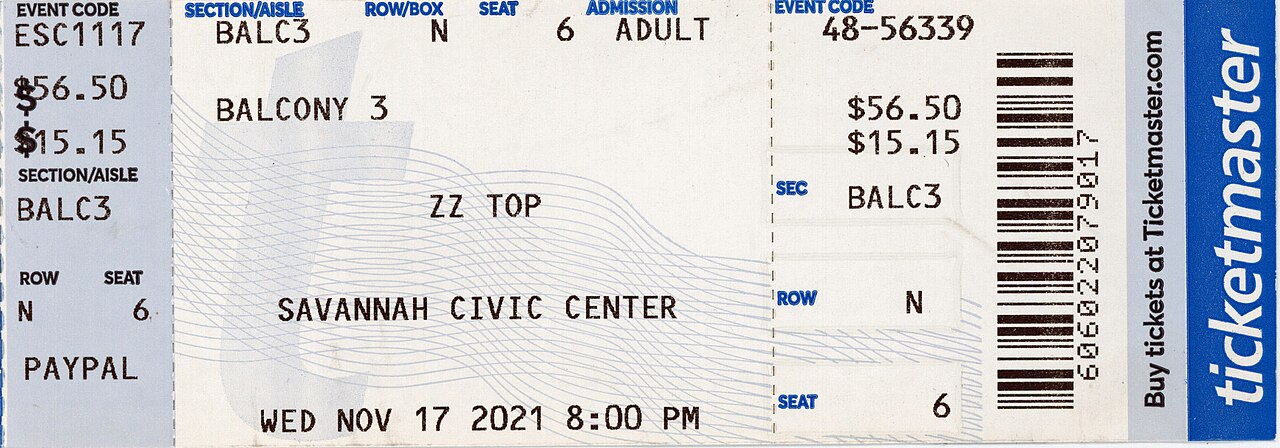

Maintained by Omar Afra · Updated
How the record supports it
Ticketmaster attributes face-value decisions to the event organizer and describes service and facility charges separately. The FTC's all-in pricing rule requires disclosure of mandatory charges up front; it does not cap them. Who sets the price, the fee stack, and the historical prices record separate those questions rather than treating one checkout total as a measure of promoter margin.
What to compare
Start with the exact ticket: seat or general admission, primary sale or resale, standard or premium inventory. A standard face-value ticket, a dynamically priced premium seat and a resale listing are different products even when they admit a fan to the same event. Next identify the advertised total and its mandatory charges. The advertised face price is not necessarily the total paid, and a facility charge is not evidence that the ticketing platform kept that money. Then ask who presents the event and whether a higher priced tier was released, rather than assuming that every price change was a platform fee increase. The face-value guide and pricing authority guide set out the differences.
Reading the evidence
Historical comparisons need an equally careful denominator. Live Index's ticket-price history preserves each observation's source and period; some are a single show's quoted face price and others are averages across a trade publication's sample. Neither can be passed off as the price paid by the typical American attendee. Federal admissions CPI includes movies and theatres alongside concerts, so it can track a broader price category but cannot isolate the cost of a concert. Touring expenses and artist guarantees may influence an organizer's price decision, but without an event settlement they cannot be quantified as a share of this ticket's checkout total. The distinction between a plausible explanation and a measured causal contribution matters: the former describes the mechanics, the latter would require contracts, matched inventory and transaction data not available in the cited public record.
Where the answer stops
A rise in posted prices at one artist's shows does not imply the same movement at clubs, festivals or another tour. Even for that artist, seats can be released in stages and different price bands can sell at different rates. The share of inventory sold at each tier is needed to infer a realized average. This page describes incentives and disclosed rules; it does not claim to reconstruct a promoter's confidential budget or the reason a particular artist approved a particular price.
Sources and limits
No public, comparable event-level contracts or inventory data establish the relative contribution of each cause for the average U.S. concert.
- Reuters — Why U.S. concert tickets are so expensive
- Pollstar top-tour averages and demand, presale and resale context; not a representative national ticket price.
- U.S. Department of Justice — 2024 Live Nation–Ticketmaster lawsuit
- Antitrust allegations only; not adjudicated proof of a particular ticket markup.
- U.S. Department of Justice — 2010 merger approval
- Merger and consent-decree context, not a ticket-price estimate.
- U.S. Department of Justice — Live Nation competitive impact statement
- Describes organizer, artist and ticketing money flows; does not measure each ticket's margin.
- Associated Press — All-in pricing
- Reports FTC total-price-display requirements, not a price cap.
- Ticketmaster — How prices and fees are determined
- Platform's account of organizer decisions and fee categories; interested-party statement.
- FTC — Rule on unfair or deceptive fees
- Mandatory total-price disclosure, not a price or fee cap.
Cite this reference
- Plain
- Omar Afra, "Why Are Concert Tickets So Expensive? Causes and Fees", Live Index, September 29, 2026 (updated September 29, 2026), https://liveindex.io/reference/why-are-concert-tickets-so-expensive
- APA
- Afra, O. (2026, September 29). Why Are Concert Tickets So Expensive? Causes and Fees [Reference guide]. Live Index. https://liveindex.io/reference/why-are-concert-tickets-so-expensive
- Chicago
- Omar Afra. "Why Are Concert Tickets So Expensive? Causes and Fees." Live Index, September 29, 2026. https://liveindex.io/reference/why-are-concert-tickets-so-expensive.
- BibTeX
- @online{reference-why-are-concert-tickets-so-expensive-2026, author = {Omar Afra}, title = {Why Are Concert Tickets So Expensive? Causes and Fees}, organization = {Live Index}, date = {2026-09-29}, urldate = {2026-09-29}, url = {https://liveindex.io/reference/why-are-concert-tickets-so-expensive} }