Reference
What is Ticketmaster Face Value Exchange?
Face Value Exchange is an event-specific resale option, not a promise that every Ticketmaster ticket can be transferred or resold. Its ceiling is the buyer's original total, not merely the base face price.

Maintained by Omar Afra · Updated
The direct answer
Ticketmaster's Face Value Exchange is an artist-enabled resale mechanism for eligible tickets. A ticket is listed at the total amount originally paid, including the face value and applicable fees and taxes, rather than at whatever higher price a secondary-market seller wants to ask. Ticketmaster describes selling through the exchange as free to the seller. Those are descriptions of the program, not proof that a particular event participates.
From an original purchase to a resale listing
- Original purchase → the buyer pays an event-specific face price plus required charges and taxes.
- Eligibility → the artist and event terms must enable the exchange; some transfers or resale listings may be restricted by law.
- Listing → for an eligible ticket, the platform describes the listing price as the original total paid, rather than the face price alone.
- New buyer → the listing returns the ticket to another eligible buyer through the permitted channel. The original seller's ability to list is not a guarantee of a sale.
Face value is not the same thing as original total
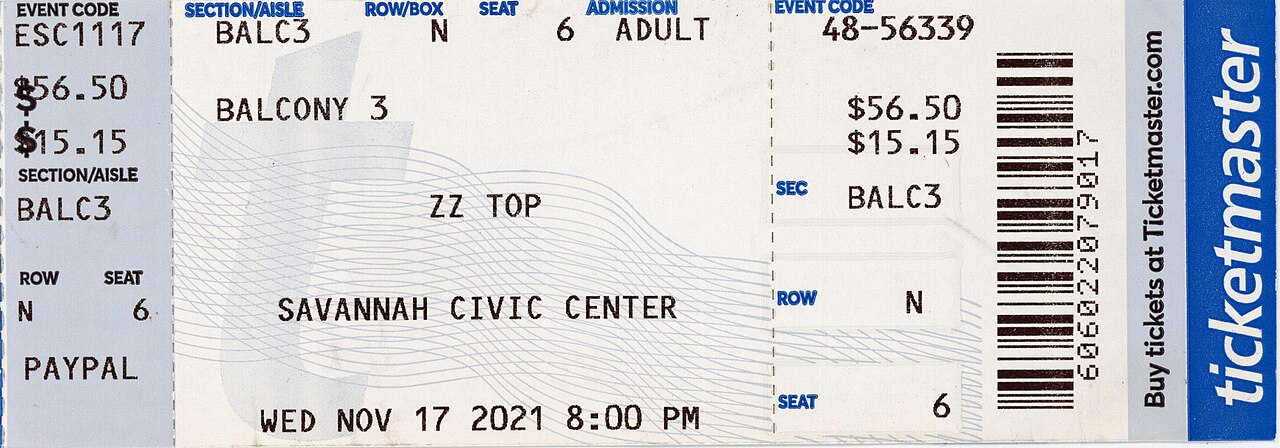
The phrase face value can mislead when attached to an exchange. The base price printed on a ticket is not necessarily everything the first buyer paid. Ticketmaster's program description includes applicable fees and taxes in the amount paid originally. A listing at that amount can therefore exceed the ticket's face value in the narrow accounting sense while still meeting the program's total-price rule. The fee guide separates charges shown at checkout; it does not assume that each fee reaches the platform.
The artist-enabled condition
Ticketmaster describes this as an option artists can enable. That does not mean a buyer can decide unilaterally to apply the rule to any ticket on the site. It also does not mean an artist can override all state restrictions on ticket transfer, or that every ticket within a participating event has the same resale eligibility. Check the event's purchase terms and the account's actual resale controls before making a claim about a specific show. An unavailable listing button is not evidence that the ticket has no value, and an available button is not evidence of an eventual buyer.
How it differs from ordinary secondary resale
A conventional secondary listing can be repriced by a seller subject to the marketplace's rules and applicable law. The Face Value Exchange constrains the eligible listing to an original-paid total. It is a mechanism for transferring eligible inventory with a price ceiling, not a measurement of secondary-market prices generally. It also differs from a primary ticket sold for the first time by an event organizer. The primary versus secondary guide explains which transaction is being measured; the resale-payout guide explains why a resale transaction should not automatically be counted as a new primary admission receipt.
What the public description cannot answer
The help pages describe the exchange's conditions but do not establish how often artists enable it, how many tickets are sold through it, or what fraction of all resale takes place at the original price. They cannot prove whether a particular buyer made or lost money after unrelated costs, nor identify the private commercial terms between event parties. Ticketmaster's description is a first-party account of a product, not an independently audited national resale dataset. Where an event's legal transfer rules or terms differ, those event-specific rules control the practical experience.
Sources and limits
- Artist participation and ticket eligibility vary by event.
- Legal restrictions and event terms can limit transfer or resale.
- The published program description does not disclose national participation or transaction totals.
- Ticketmaster Help — How does Face Value Exchange work?
- Platform description of total-original-price listing, seller fees and limitations.
- Ticketmaster Business — Face Value Exchange
- First-party description of the artist-enabled program.
Cite this reference
- Plain
- Omar Afra, "Ticketmaster Face Value Exchange: Price and Restrictions | Live Index", Live Index, October 1, 2026 (updated October 1, 2026), https://liveindex.io/reference/ticketmaster-face-value-exchange
- APA
- Afra, O. (2026, October 1). Ticketmaster Face Value Exchange: Price and Restrictions | Live Index [Reference guide]. Live Index. https://liveindex.io/reference/ticketmaster-face-value-exchange
- Chicago
- Omar Afra. "Ticketmaster Face Value Exchange: Price and Restrictions | Live Index." Live Index, October 1, 2026. https://liveindex.io/reference/ticketmaster-face-value-exchange.
- BibTeX
- @online{reference-ticketmaster-face-value-exchange-2026, author = {Omar Afra}, title = {Ticketmaster Face Value Exchange: Price and Restrictions | Live Index}, organization = {Live Index}, date = {2026-10-01}, urldate = {2026-10-01}, url = {https://liveindex.io/reference/ticketmaster-face-value-exchange} }