
Independent · Historical
Mimi Fariña
founder and institutional performance organizer, Bread & Roses
Mimi Fariña founded Bread & Roses in 1974 to bring free live performance to people isolated in institutional settings.
Last updated 2026-10-25
In short
Mimi Fariña is documented here as a historical founder and institutional performance organizer at Bread & Roses, not a current employee. Built a free-performance institution for audiences outside conventional ticketed venues. Mimi Fariña founded Bread & Roses in 1974 to bring free live performance to people isolated in institutional settings.
Quick facts
- Historical role
- founder and institutional performance organizer
- Organisation
- Bread & Roses
- Primary category
- Independent
- Known for
- Founded Bread & Roses.; Photographed at a Bread & Roses benefit, September 6, Berkeley Community Theater.; Died in July; later organizational output remains separate.
- Last verified
- 2026-10-25
- Historical relationships
- Bread & Roses
Historical account
Mimi Fariña founded Bread & Roses in 1974 to bring free live performance to people isolated in institutional settings. The organization’s mission and history page identifies youth, adults and seniors whose circumstances limited access to ordinary concert venues. Her historical role concerns the creation of that performance institution; the organization’s present programming is not counted as her personal output.
The operating distinction is access rather than ticket yield. Bread & Roses describes Fariña bringing musician friends into nearby institutions, creating direct encounters between performers and audiences. Its mission encompasses free live music and performing arts for isolated, institutionalized or marginalized people. These performances belong in live-music infrastructure even when no conventional box office exists. An admission-price dataset would miss them, while a performance record can describe the presenting organization, setting and source without inventing ticket revenue.
Why Mimi Fariña matters in live music
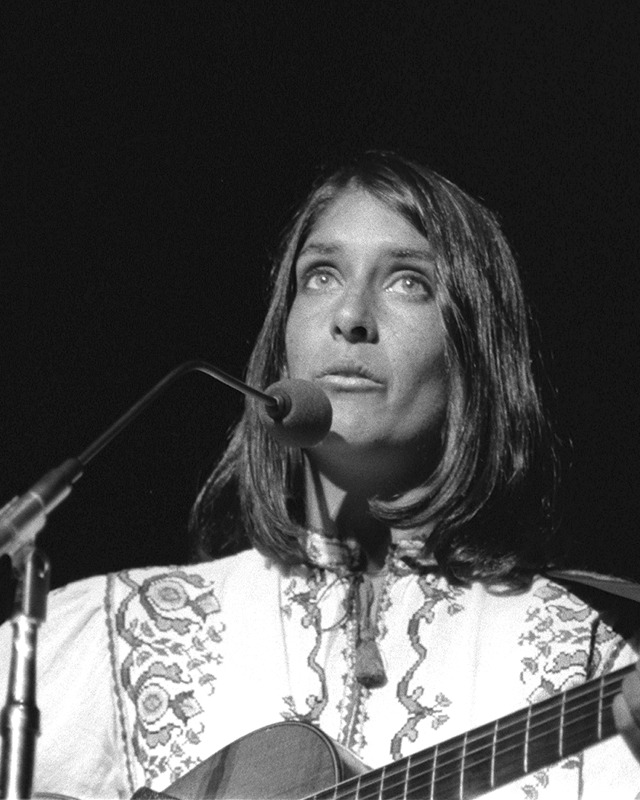
Marian Hubler’s April 29, 2020 institutional photo tribute, updated May 15, records Fariña’s death in July 2001 and places her alongside performers in settings including San Quentin. The tribute and mission page are both Bread & Roses sources, not two independent assessments. They substantiate the founding history and the organization’s intended audience but do not establish medical outcomes, changes in recidivism or a causal health benefit. The licensed portrait here shows Fariña at a September 6, 1975 Bread & Roses benefit at Berkeley Community Theater, photographed by David Gans; it is not a photograph of an institutional visit. A benefit concert and a free institutional performance can support the same organization while having different audience and financing arrangements. Live Index links her work to live-music undercount as related methodological reading: a commercial ticketing series cannot stand in for the full set of live-performance institutions.
Career record
- 1974Founded Bread & Roses.
- 1975Photographed at a Bread & Roses benefit, September 6, Berkeley Community Theater.
- 2001Died in July; later organizational output remains separate.
Entity relationships
Historical
Mimi Fariña founded Bread & Roses.
Related Live Index research and records
References and sources
- Mission & History — Bread & Roses. Primary corporate source. Retrieved 2026-10-25.Cited for: Fariña founded Bread & Roses in 1974 to present free performances to isolated institutional audiences.
- A photo tribute to our founder, the late Mimi Fariña — Bread & Roses. Primary corporate source. Retrieved 2026-10-25.Cited for: Marian Hubler, April 29, 2020, updated May 15; founder died July 2001; institutional performance settings.