Research
Why Good Music Cities Need Bad Rooms
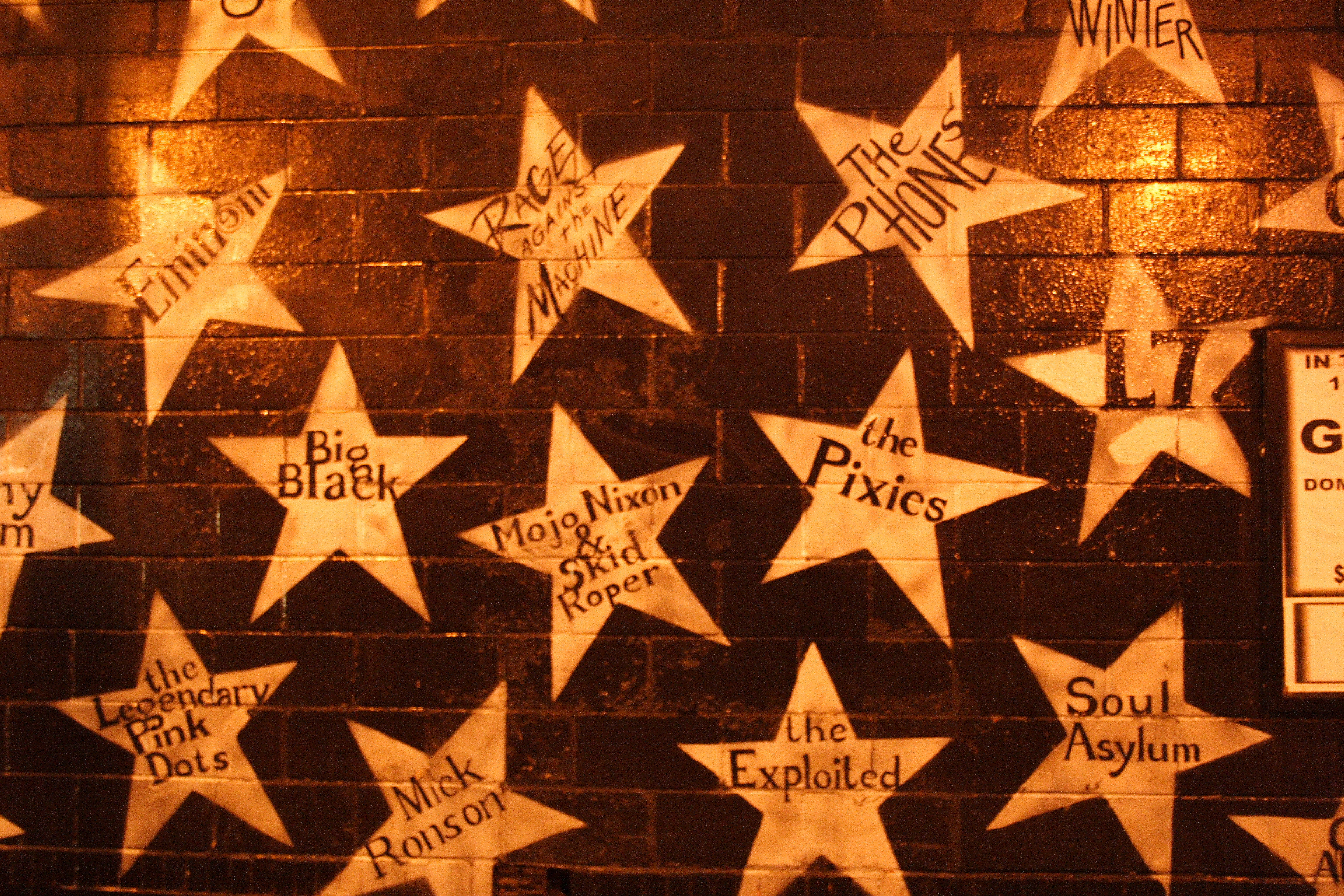
Low-cost, imperfect and marginal spaces often perform a research-and-development function for culture. Their inefficiency by conventional real-estate standards can be precisely what makes experimentation economically possible.
- Authors
- Published
- Updated
Conceptual framework · not measured data
Inefficiency read two ways
The article's argument is that the qualities that make a marginal space look like poor real estate are the same qualities that make experimentation affordable. Each row states one attribute under both readings.
- Low rent
- Under-performing use of the site.
- A failed night costs little enough to attempt.
- Rough finish
- Deferred maintenance and low quality.
- No production standard to meet before playing.
- Small capacity
- Limited revenue ceiling.
- A first audience is reachable rather than theoretical.
- Informal operation
- Unprofessional and inconsistent.
- Low overhead per event and fast programming decisions.

Conventional real-estate analysis rewards productive use of space: high occupancy, predictable rent, strong credit tenants and efficient conversion of square footage into revenue. Cultural development often begins under opposite conditions. New bands, experimental promoters, small arts organizations and unconventional audiences frequently need rooms that are inexpensive, flexible and tolerant of uncertain demand. The spaces capable of providing those conditions are often the buildings a conventional investor would describe as underperforming.
This creates a recurring tension in cultural districts. Low-cost space allows experimentation. Successful experimentation makes an area more attractive. Higher demand raises rents and property values. The cultural producers who helped create the amenity value are then less able to afford the district. The pattern should not be romanticized—cheap rooms can have poor accessibility, unsafe infrastructure and unstable management—but their low opportunity cost can function as an economic subsidy for cultural risk.
The National Endowment for the Arts' creative-placemaking framework recognizes that cultural activity can participate in neighborhood and regional development, and its Sound Places work treats music as a catalyst for public-space and community projects.12 The Bureau of Economic Analysis separately measures arts and cultural production as a major economic sector, accounting for $1.17 trillion, or 4.2 percent of U.S. GDP, in 2023.3 Neither source argues that every marginal venue creates measurable redevelopment, but both support the broader premise that cultural production interacts with place and economic activity.
A low-cost venue provides option value. A promoter can attempt a new genre night without requiring a thousand paid admissions. A band can perform before it has sufficient demand for a formal theater. An artist can fail at a scale where failure is survivable. This is analogous to research and development in other industries: most experiments do not become major products, but a system with no affordable experimental capacity will produce fewer innovations.
The economics of failure are therefore central. If every room requires a commercially proven act, the market becomes selection rather than development. Programming converges toward known demand because the cost of being wrong is too high. Marginal spaces tolerate a higher failure rate and can therefore discover demand that formal institutions would not have predicted.
This does not imply that poor working conditions or unsafe facilities should be preserved in the name of authenticity. Building codes, labor standards, accessibility and basic professional practices exist for good reasons. The useful distinction is between low-cost flexibility and low-quality operation. A healthy music city should be capable of maintaining inexpensive creative space without requiring dangerous or exploitative conditions.
Real-estate policy can influence that balance. Zoning that permits mixed cultural uses, adaptive reuse of older buildings, cultural-district incentives, long-term leases and inclusion of performance space in larger developments can reduce displacement pressure. Public or philanthropic ownership can also remove some properties from purely speculative rent cycles. The appropriate tool depends on local conditions, and each creates tradeoffs in subsidy and opportunity cost.
The venue itself may be temporary. Cultural ecosystems do not require every room to last forever; they require a continuing supply of rooms in which new activity can begin. A city can lose one beloved club and remain healthy if other inexpensive spaces emerge. A more serious problem occurs when development removes an entire class of affordable rooms and regulatory barriers prevent replacement.
Live Index can measure this through a low-capacity entry-cost layer within the Venue Supply Index. Relevant variables include minimum room rental, average ticket price, all-in production requirement, number of bookable dates, neighborhood commercial rent, ownership stability and the share of programming devoted to developing artists. These variables are imperfect, but they move the discussion from nostalgia toward infrastructure.
The phrase "bad room" is intentionally provocative but economically specific. It refers to a space that may be awkward, unfashionable or inefficient yet permits activity whose future value is unknown. Music cities need some inventory that is not already optimized for maximum revenue because cultural discovery is itself an uncertain process. If every square foot must justify itself at the current highest commercial use, the city can consume the conditions that allow new cultural value to emerge.
Research notes and limitations
Causal links between venues and neighborhood development are difficult to isolate because cultural activity often locates in neighborhoods already undergoing change. The framework should not be used to claim that a specific venue caused property appreciation without careful local analysis.
References
- 01National Endowment for the Arts, Defining Creative Placemaking. www.arts.gov/stories/magazine/2012/3/arts-and-culture-core/defining-creative-placemaking
- 02National Endowment for the Arts, Sound Places Toolkit. www.arts.gov/sites/default/files/Sound-Places-Toolkit.pdf
- 03U.S. Bureau of Economic Analysis, Arts and Cultural Production Satellite Account, U.S. and States, 2023, April 2, 2025. www.bea.gov/news/2025/arts-and-cultural-production-satellite-account-us-and-states-2023
Publication record
The structured record for this document. Classification is drawn from the Live Index controlled vocabulary so relationships between people, subjects, places and measurements stay consistent across the platform.
- Content type
- Study
- Primary topic
- Cultural Economics
- Secondary topics
- Independent PromotersArtist EconomicsUrban Development
- Themes
- Independence
- Economic concepts
- Fixed CostsDemand
- Measurements
- Live IndexVenue Supply Index
- Methodology
- What we measure
Corrections and revisions
No corrections have been issued for this document. Substantive errors are corrected on this page, dated and retained.
Cite this research
- Plain
- Omar Afra, "Why Good Music Cities Need Bad Rooms", Live Index, August 13, 2026, https://liveindex.io/research/why-good-music-cities-need-bad-rooms
- APA
- Afra, O. (2026, August 13). Why Good Music Cities Need Bad Rooms. Live Index. https://liveindex.io/research/why-good-music-cities-need-bad-rooms
- Chicago
- Omar Afra. "Why Good Music Cities Need Bad Rooms." Live Index, August 13, 2026. https://liveindex.io/research/why-good-music-cities-need-bad-rooms.
- BibTeX
- @online{research-why-good-music-cities-need-bad-rooms-2026, author = {Omar Afra}, title = {Why Good Music Cities Need Bad Rooms}, organization = {Live Index}, date = {2026-08-13}, url = {https://liveindex.io/research/why-good-music-cities-need-bad-rooms} }